
Archive: August 30, 2025

Reliance Industries to Set Up 500 CBG Plants by 2030, Empowering Farmers as ‘Urja Daata’

Mumbai, August 29, 2025 – At the Annual General Meeting (AGM), Anant Ambani, Executive Director of Reliance Industries, announced a major push into the Compressed Biogas (CBG) sector. Reliance plans to establish 500+ CBG plants across India by 2030, a move aimed at transforming farmers into energy producers or “Urja Daata”.
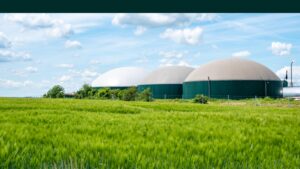
Reliance’s CBG Expansion Plans

For the current financial year, Reliance has set a target of commissioning 55 CBG plants with a combined capacity of 500,000 tonnes. This initiative will significantly contribute to India’s energy independence while creating new revenue streams for farmers through bio-energy production.

Anant Ambani emphasized:

“Reliance entered the Bio Energy business with a clear mission – to help India achieve energy independence and empower millions of farmers as ‘Urja Daata’.”

Research & Innovation at Jamnagar

To strengthen this vision, Reliance has established a dedicated R&D facility at Jamnagar. The center is developing:

  • Advanced enzymes and microbial consortia to improve biogas yields

  • High-yield energy crops for better productivity

  • Innovative integrated energy hubs combining multiple renewable sources

Building the World’s First Integrated Energy Hub

Reliance is also working on energy plantations on wastelands, focusing on agrivoltaics, where solar PV and CBG plants operate on the same land. By capturing biogenic carbon dioxide from CBG units, these hubs will be used for producing green chemicals, moving closer to fossil fuel parity.

This integrated approach marks a milestone towards green hydrogen, smart farms, and sustainable energy solutions.

A Step Towards India’s Green Future

Reliance’s large-scale CBG initiative not only addresses clean energy goals but also creates opportunities for rural empowerment and decentralized energy production. By 2030, these projects aim to make India less dependent on fossil fuels while supporting the government’s Net Zero vision.

10% Biofuel Blended Biodiesel Coming Soon: Nitin Gadkari

10% Biofuel Blended Biodiesel Coming Soon: Nitin Gadkari

This announcement comes in the backdrop of India’s growing automobile sector, which has recently overtaken Japan to become the world’s third-largest car market. While the industry is a major contributor to GST and provides employment to over 4.5 crore people, it also accounts for nearly 40 percent of air pollution by some estimates. The shift to biodiesel is being positioned as a necessary countermeasure, with isobutanol also being explored as a diesel alternative.

Gadkari pointed to one success already seen from the current biofuel push: the reduction in stubble burning. Farmers are increasingly supplying agricultural waste like rice straw for biofuel production, reducing air pollution and creating new income streams in rural areas.

Progress and Bottlenecks in Biodiesel Adoption

The National Policy on Biofuels (2018) set a target of 5 percent biodiesel blending with diesel by 2030. However, current blending levels remain low, reportedly around 0.6 percent in FY25. Gadkari’s statement about the upcoming 10 percent biodiesel blend appears to be a step toward fast-tracking this goal, though implementation remains uneven.

Meeting the 5 percent blending goal alone will require around ₹2,500 crore in investment, according to industry estimates. Key hurdles include limited infrastructure, inadequate incentives, and poor collection of used cooking oil – an essential raw material for biodiesel. Companies with integrated edible oil processing capacity are better placed to scale up biodiesel production, but wider sectoral participation is still lacking.

Linking Biofuels to Rural Prosperity

For Gadkari, the biofuel narrative is not just environmental. He repeatedly positioned it as an economic strategy to revitalise India’s rural economy. The Minister cited ethanol production from maize as a successful case study, where the shift in agricultural demand led to maize prices doubling from ₹1,200 to ₹2,600 per quintal.

He introduced the “4 Es” framework—Ecology, Environment, Economy, and Ethics—to highlight how agriculture can be integrated into the energy value chain. He argued that if the agricultural GDP, currently at 12 to 14 percent, could match the industrial sector’s contribution, it would not only reduce India’s energy import bill (currently around 85 percent dependent on imports) but also redirect wealth towards farming communities.