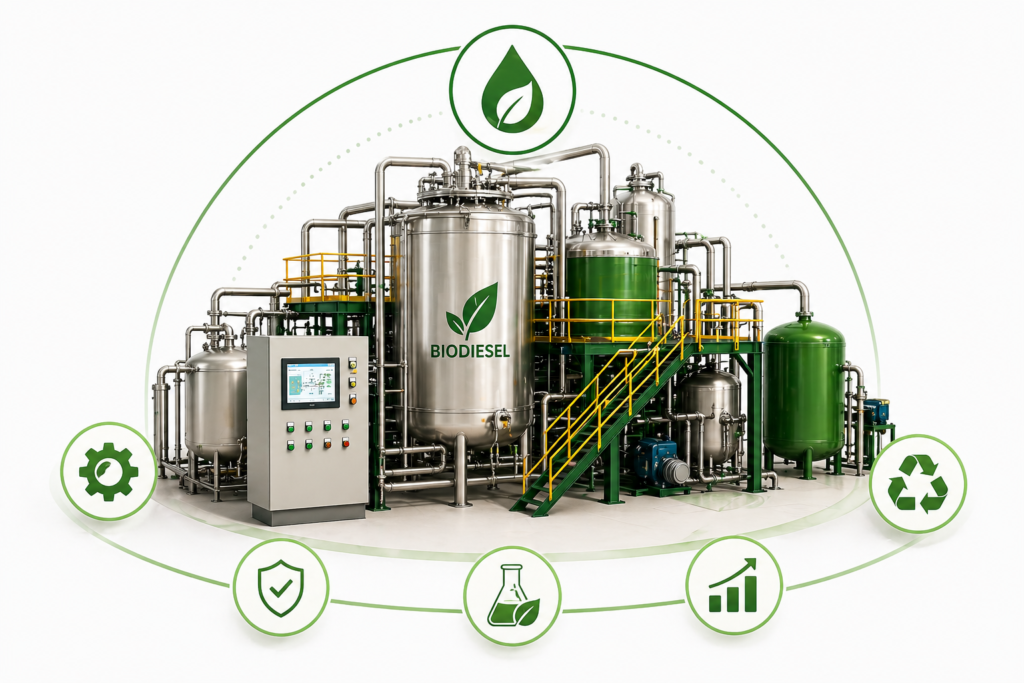
The deodorization process for biodiesel feedstock is crucial to remove undesirable odors and volatile compounds, ensuring the final biodiesel product is clean and suitable for use. This process is typically employed when the feedstock for biodiesel production comes from vegetable oils or animal fats that may have strong, unpleasant smells due to free fatty acids, impurities, or degradation products.
Removes volatile impurities and free fatty acids from biodiesel feedstock.
High-temperature, low-pressure steam stripping process for effective odour removal.
Improves feedstock quality for downstream transesterification which increases yield and purity
Suitable for processing UCO, animal fats, tallow, and crude vegetable oils.
Modular, skid-mounted design for easy integration with
existing biodiesel plants.
Corrosion-resistant stainless steel and alloy construction for long plant life.
Why Choose Three S Bio Harbour Section
Purpose-Built for Biodiesel
Our systems are designed specifically for biodiesel operations and not repurposed generic industrial equipment.
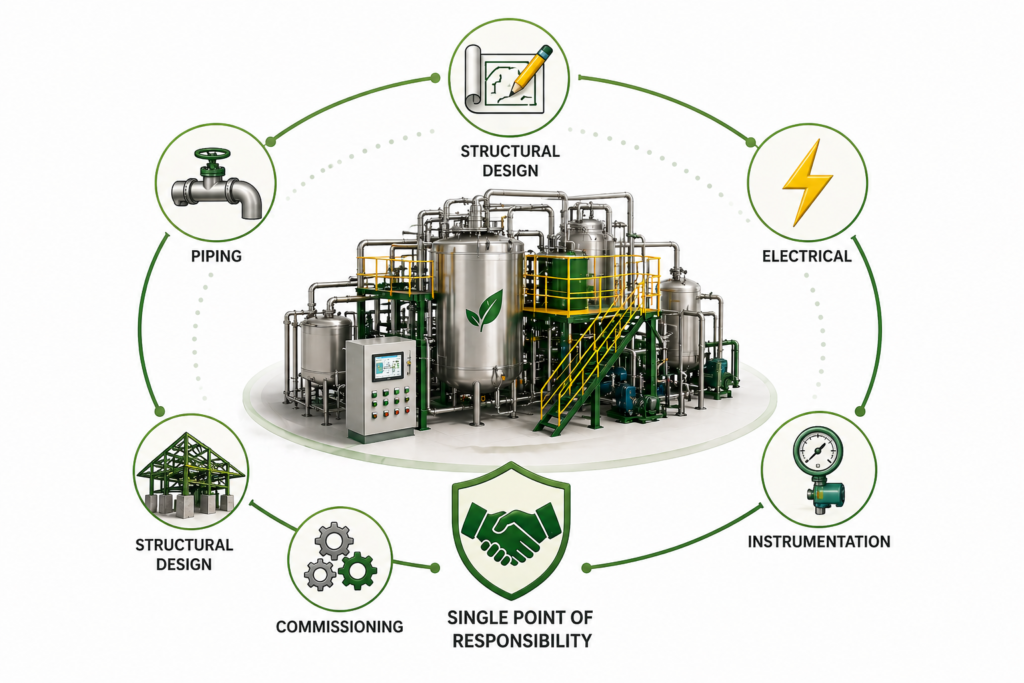
Full Turnkey Scope
We handle structural design, piping, electrical, instrumentation, and commissioning with single point of responsibility for your entire project.
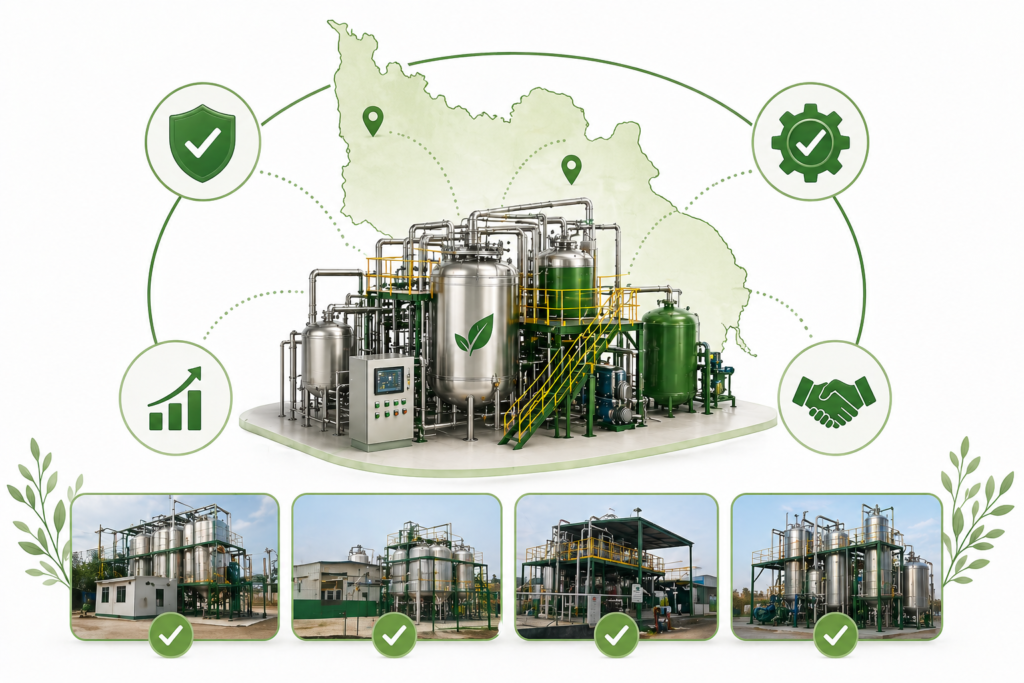
Proven Installations
Systems delivered and operating across Uttar Pradesh reference installations available on request.
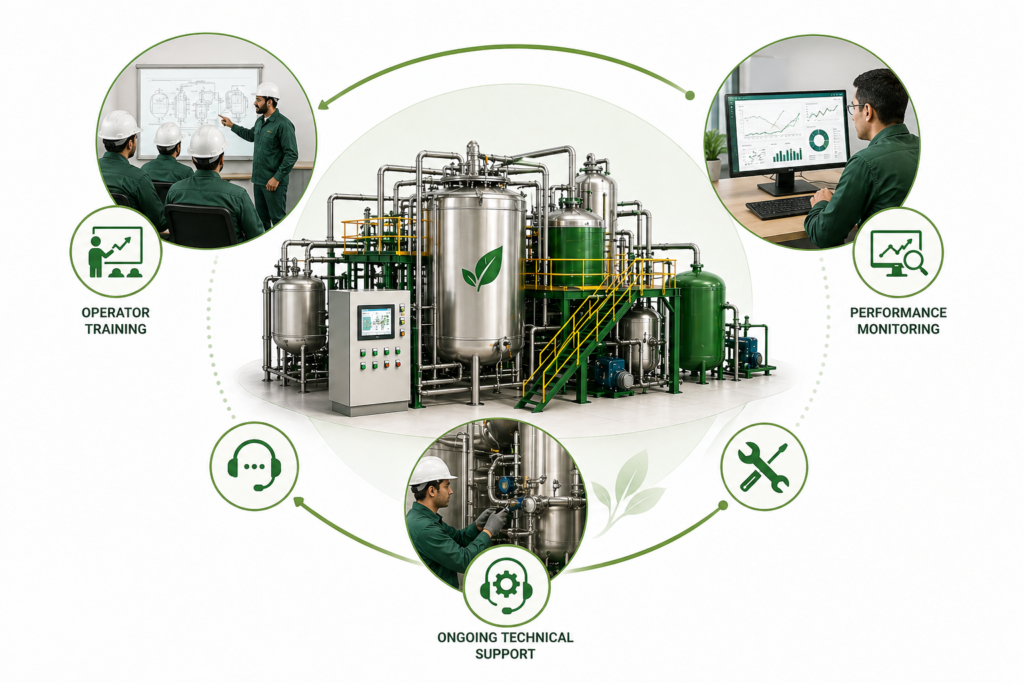
After-Sales Support
Operator training, performance monitoring, and ongoing technical support after commissioning.
Here's A Brief Overview Of The Deodorization Process:
Vacuum Deodorization
The feedstock oil (such as soybean oil, palm oil, or animal fats) is heated to a high temperature, typically between 200°C to 250°C, under a vacuum. This reduces the pressure in the system, allowing volatile compounds and odor-causing substances to evaporate at lower temperatures, which preserves the quality of the oil.
Steam Injection
Steam is injected into the heated oil to facilitate the removal of volatile compounds. The steam helps carry away unwanted odors and impurities from the feedstock.
Filtration
After the deodorization step, the feedstock may undergo filtration to remove any remaining solid particles or impurities, ensuring that the oil is ready for transesterification or further processing.
Catalyst Neutralization
In some cases, deodorization can also be part of a broader refining process, including neutralizing free fatty acids or removing impurities like phospholipids, which might affect the biodiesel quality.
Deodorization ensures that the biodiesel feedstock is free from off-putting odors and impurities, ultimately leading to a high-quality biodiesel product that meets both environmental and performance standards. This step helps produce a clean, stable, and consistent fuel that is more effective and pleasant for use in engines.
Need a Deodorization System for Your Biodiesel Process?
Our engineering team will assess your requirements and design a system to your exact specifications.